
Introduction:
Social media is no longer just a place to share content. In 2026, it plays a major role in brand visibility, customer engagement, AI search discovery, and online growth.
A well-planned social media strategy helps businesses create consistent content, reach the right audience, and improve results across platforms such as Facebook, Instagram, LinkedIn, TikTok, YouTube, and X.
With Google’s AI Overviews, entity-based search, EEAT signals, and generative AI platforms becoming more influential, businesses need a clear social media strategy to stay competitive.
A social media strategy is a documented plan that outlines how a business will use social media platforms to achieve specific goals.
It includes:
- Business objectives
- Target audience
Content types
- Posting schedule
- Platform selection
- Posting schedule
- Engagement plan
- Performance measurement
Simple Definition
A social media strategy is a roadmap that guides what you post, where you post it, and why you post it.
Example
A local fitness company may use the following:
- Instagram for workout videos
- Facebook for community engagement
- YouTube for tutorials
- LinkedIn for business partnerships
All activities support the goal of generating new memberships.
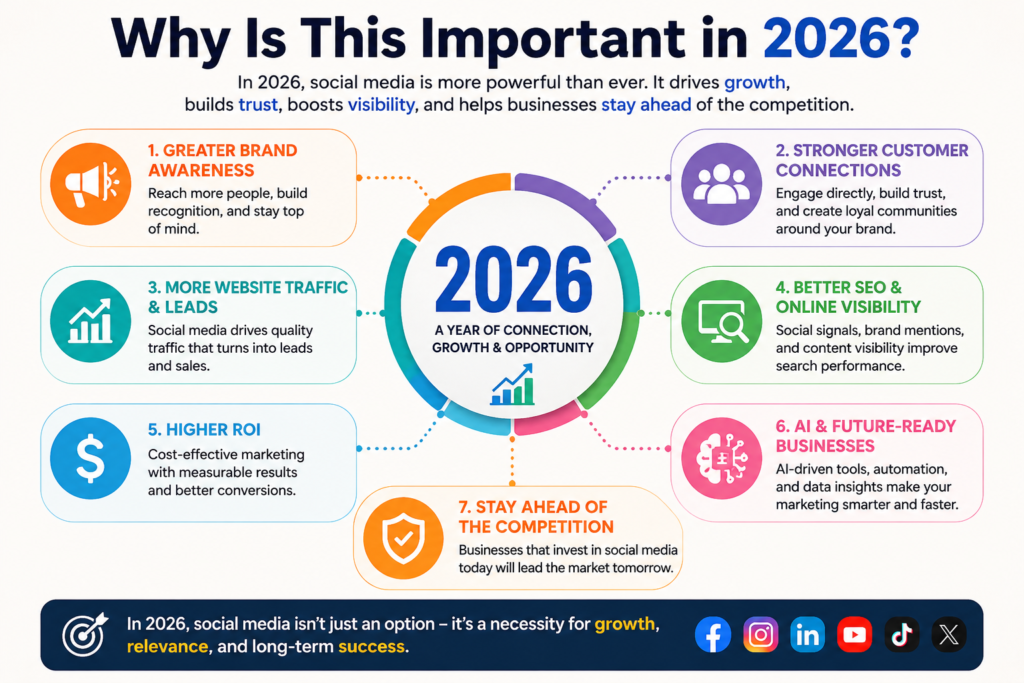
Social media influences:
| Benefit | Impact |
|---|
| Brand Awareness | More visibility |
| Website Traffic | More visitors |
| Lead Generation | More potential customers |
| Customer Trust | Better reputation |
| AI Search Visibility | Increased citations |
| Sales Growth | Higher conversions |
Modern AI systems analyze social signals, brand mentions, content quality, and authority indicators when understanding brands online.
Businesses with strong social media activity often build the following:
- Better EEAT signals
- Stronger entity recognition
- Greater topical authority
- Increased user trust
What Changed in Google’s Latest Update?
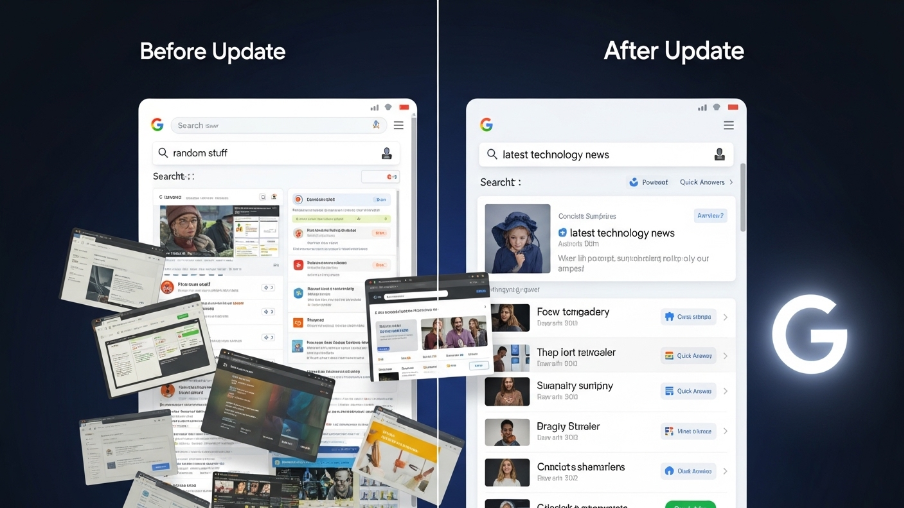
Several Google updates have changed how businesses approach social media and content marketing.
AI Overviews
Google now provides AI-generated answers directly in search results.
Businesses with clear, authoritative content are more likely to be referenced.
Helpful Content System
Google rewards content that
- Solves real problems
- Demonstrates expertise
- Provides useful information
Low-value content performs poorly.
Core Updates
Google increasingly evaluates the following:
- Content quality
- User experience
- Brand authority
- Trustworthiness
Spam Updates
Spammy tactics such as
- Keyword stuffing
- Fake engagement
- Automated low-quality content
are heavily penalized.
EEAT Improvements
Google prioritizes:
- Experience
- Expertise
- Trustworthiness
Entity-Based Search
Google understands brands as entities rather than collections of keywords.
Consistent social media branding helps strengthen entity recognition.
AI Search Experience
AI platforms such as
- ChatGPT
- Gemini
- Gemini
- Perplexity
prefer citing trusted brands with strong online authority.

A strong social media strategy can indirectly improve rankings by increasing:
- Brand searches
- Content visibility
- User engagement
- Backlink opportunities
- Brand mentions
- Trust signals
Impact Table
| Factor | Ranking Impact |
| Brand Mentions | Positive |
| User Engagement | Positive |
| Authority Signals | Positive |
| Consistent Content | Positive |
| Low-Quality Posts | Negative |
| Spam Activity | Negative |
Social Media Strategy Checklist
✅ Define measurable goals
✅ Understand your audience
✅ Choose the right platforms
✅ Create helpful content
✅ Maintain brand consistency
✅ Optimize profiles
✅ Use entity-based branding
✅ Publish regularly
✅ Monitor analytics
✅ Improve EEAT signals
✅ Encourage customer interaction
✅ Repurpose content across channels
✅ Build topical authority
✅ Create content for AI search visibility
What Are the Biggest Mistakes to Avoid?
Checklist
❌ Posting without a plan
❌ Ignoring audience needs
❌ Buying fake followers
❌ Publishing low-quality content
❌ Inconsistent branding
❌ Focusing only on sales
❌ Ignoring analytics
❌ Not responding to comments
❌ Keyword stuffing social posts
❌ Using AI-generated content without editing
❌ Neglecting EEAT principles
❌ Ignoring voice search trends
Real-World Example:
Before Strategy
A small online clothing store:
- Posted randomly
- Had no content calendar
- Used inconsistent branding
Received low engagement
Results:
- Low website traffic
- Minimal sales
- Poor audience growth
After Strategy
The business implemented the following:
- Weekly content planning
- Customer testimonials
- Educational content
- Consistent visual branding
Results after several months:
- Increased engagement
- More website visits
- Higher brand recognition
- Better customer trust
- More sales opportunities
Expert Tips
- Focus on Audience Problems
Create content that solves questions and challenges.
2. Build Topical Authority
Cover your niche consistently.
3. Use Video Content
Short videos continue to dominate engagement.
4. Optimize Profiles
Keep business information accurate and complete.
5. Strengthen Brand Entities
Use the same business name and branding everywhere.
6. Encourage User-Generated Content
Customer content builds trust.
7.Track Analytics Monthly
Measure what works and improve continuously.
8. Create AI-Friendly Content
Use clear headings, concise answers, and structured information.
9. Optimize for Voice Search
Answer conversational questions naturally.
10. Prioritize EEAT
Show expertise and real-world experience.
AI-Powered Customer Support Ticket Router
Key Takeaways:
- A social media strategy is a roadmap for achieving marketing goals.
- Consistent planning improves engagement and growth.
- Google’s AI-driven search rewards trusted brands.
- EEAT, entity SEO, and topical authority are increasingly important.
- Businesses should create useful content that serves real user needs.
- Strong social media activity supports AI search visibility.
- Voice search optimization is becoming more valuable.
- Analytics should guide future decisions.
Frequently Asked Questions:
Q: What is the purpose of a social media strategy?
A social media strategy helps businesses achieve goals through planned content, audience engagement, and measurable marketing activities.
Q: How often should I update my social media strategy?
Review performance monthly and update the strategy every quarter.
Q: Which social media platform is best for business?
A: The best platform depends on your audience, industry, and goals.
Q: Does social media help SEO?
Yes. Social media can increase visibility, yes. AI can assist with content creation, scheduling, analytics, and audience insights. and awareness, traffic, and authority signals.
Q: Can AI improve social media marketing?
Yes. AI can assist with content creation, scheduling, analytics, and audience insights.
Conclusion:
A social media strategy is essential for businesses that want to grow online in 2026. It helps create consistent messaging, improve audience engagement, strengthen EEAT signals, and increase visibility across Google, AI search engines, and social platforms.
Businesses that focus on user intent, entity SEO, topical authority, and helpful content will be in the best position to succeed in both traditional search and AI-powered discovery systems.