
Introduction:
Website marketing helps people notice a website online. It helps a brand grow over time, builds trust, and attracts more visitors. A good website is not enough on its own. People need a way to find it. That’s where website marketing comes into play. SEO, useful content, and the right promotion can help a website reach the right audience and achieve better results.
What Is Website Marketing:
Website marketing is the process of publicizing a website so people can find it, visit it, and take action. A business website is more than just a few pages on the internet. It can be a place where visitors learn about products, read useful information, and contact a business. A good website marketing strategy helps a website reach the right people in an organic way.
Typically, people do not notice a website without marketing. Good design is not just about being clean. “You need a reason for people to show up.” This is why website marketing is important for small businesses, online stores, bloggers, and service providers. It grows a website little by little.
Why Website Marketing Matters:
Today people will usually search online before they buy anything. They surf the various websites, read reviews, and compare prices to see what feels right for them. A simple, clear, and useful website can quickly build trust. People who can find what they need easily often stay longer and browse through more pages.
A business can reach people in many ways with website marketing. You can find visitors via Google searches, social media, emails, or blog articles. Depending on just one traffic source isn’t always the best idea. Such an approach can help the website grow more smoothly over time through different channels.
Search Engine Optimization In Website Marketing:
Search engine optimization is a major part of website marketing. It helps a website appear in search results when people search for topics related to it. This process takes time but can bring in long-term traffic.
Useful content is the foundation of effective SEO. Clear writing, simple page titles, and natural keywords matter. The keyword “website marketing” should be incorporated into the content in a natural way. Keyword stuffing usually results in a bad reading experience. Search engines now focus on quality and user experience.
Fast loading speed is a must too. People don’t like to wait and they don’t like slow pages. A speedy website can boost visitor satisfaction and support better rankings.
Content Marketing and Website Growth:

Content marketing and website marketing often go together. Helpful articles, guides, and blog posts provide people with something good to read. Content can solve problems and answer questions.
When users see content as authentic and useful, they tend to trust the website more. A blog can also help your SEO by adding fresh information regularly. Some websites grow because they keep posting simple content that is exactly what people want to know.
Content doesn’t need the fanciest words. Easy language works better usually because readers understand it quickly.
Social Media and Website Marketing:
Social media can simply support website marketing. Every day people spend hours scrolling through different platforms. Sharing useful website content on social channels can bring in new visitors.
Social sharing can make a blog post, product page, or service update more engaging. the help site gets The idea is not to post everywhere. It’s better to focus on places where the target audience spends time.
Consistency is key. Regular posting keeps the brand fresh in people’s minds so they return to the website when they need information or service
Email Marketing For Better Website Traffic
Email marketing still has its place in website marketing. Some consider email old-fashioned, but it’s still useful for communication and updates. An email list is an easy way for businesses to stay connected with interested visitors.
Emails can contain blog posts, product news, or helpful tips. Short messages are often more effective than long promotional copy. Readers appreciate content that doesn’t waste their time.
Building an email list takes time. Sharing useful information can motivate people to subscribe and stay connected.
Creating a User-Friendly Website:

The website should be user-friendly. Visitors should not have to struggle to find important pages. Clean layouts, readable text, and clear menus for better user experience.
A website is more powerful in marketing when visitors enjoy using it. People will avoid confusing layouts. Little things make a big difference. Easy contact options, mobile-friendly pages, and fast loading speed help achieve better results.
Too much clutter—A good website doesn’t try to impress. It’s about helping visitors do their work.
Mobile-Friendly Design Matters:
Most people on phones are browsing. Due to this change, mobile design has become an important part of website marketing. A website must function well on different screen sizes.
Tiny text and broken layouts can frustrate visitors. Mobile-friendly websites tend to keep visitors engaged for longer. Mobile performance also factors in search engines.
Testing a website on different devices can reveal issues that are easy to miss on a desktop screen.
Building Trust Through Website Marketing:
Trust is key online. Visitors make snap judgments about a website’s trustworthiness. Clear information, honesty, and professional design can increase trust.
Customer reviews, contact info, and useful pages put visitors at ease. Trust does not come overnight. It comes from consistent effort and positive experiences.
Website marketing is not only about traffic. It also means helping visitors gain confidence that they might become future customers.
Common Website Marketing Mistakes:
Some websites publish without knowing who is reading them. Some people don’t do SEO or stuff keywords into their pages. Such errors can impact visibility and degrade user experience.
Slow website speed is another common problem. Visitors leave slow websites very quickly. Weak content such as repetitive or unclear articles can also be an issue.
It is more effective to have a plan for website marketing. Small improvements over time usually yield greater results than sporadic changes.
The Future Of Website Marketing:
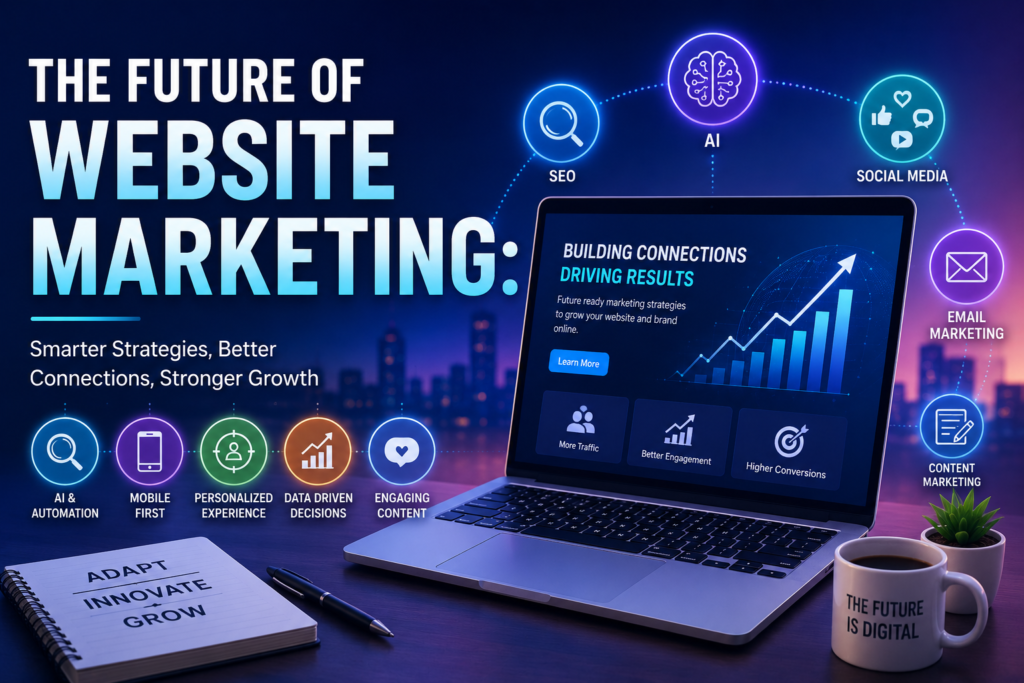
Online behavior is constantly evolving. Search trends, content formats, and user expectations are constantly evolving. Website marketing will also continue to change.
Staying relevant means focusing on useful content, a good user experience, and natural communication. People want information that seems honest and trustworthy.
The technology will continue to drive the digital growth, but the fundamental goal is simple. A website should help people obtain answers, find services, and build trust.
Final Thoughts:
There are no quick tricks to website marketing. It’s about making a website discoverable, useful, and trustworthy. Good content, SEO, mobile design, and user experience are all important.
Growth usually involves hard work and time. A valuable site can attract visitors and build deeper connections with them over time. Great website marketing puts people and communication first.