
Introduction
Learning how to do an SEO audit is crucial for anyone looking to improve their website rankings and traffic. An SEO audit helps determine any technical difficulties, weak content, slow pages, and other problems that impact search performance. It also highlights what needs improvement so a website can perform better in search results and provide users a smoother experience
How to do an SEO audit is important for anyone wanting better ranking and traffic to their websites. An SEO audit helps identify technical difficulties, weak content, slow pages, and other problems that impact search performance. It also shows how to improve a website’s performance in search results and provide users with a better experience.
Understanding SEO audits in easy way
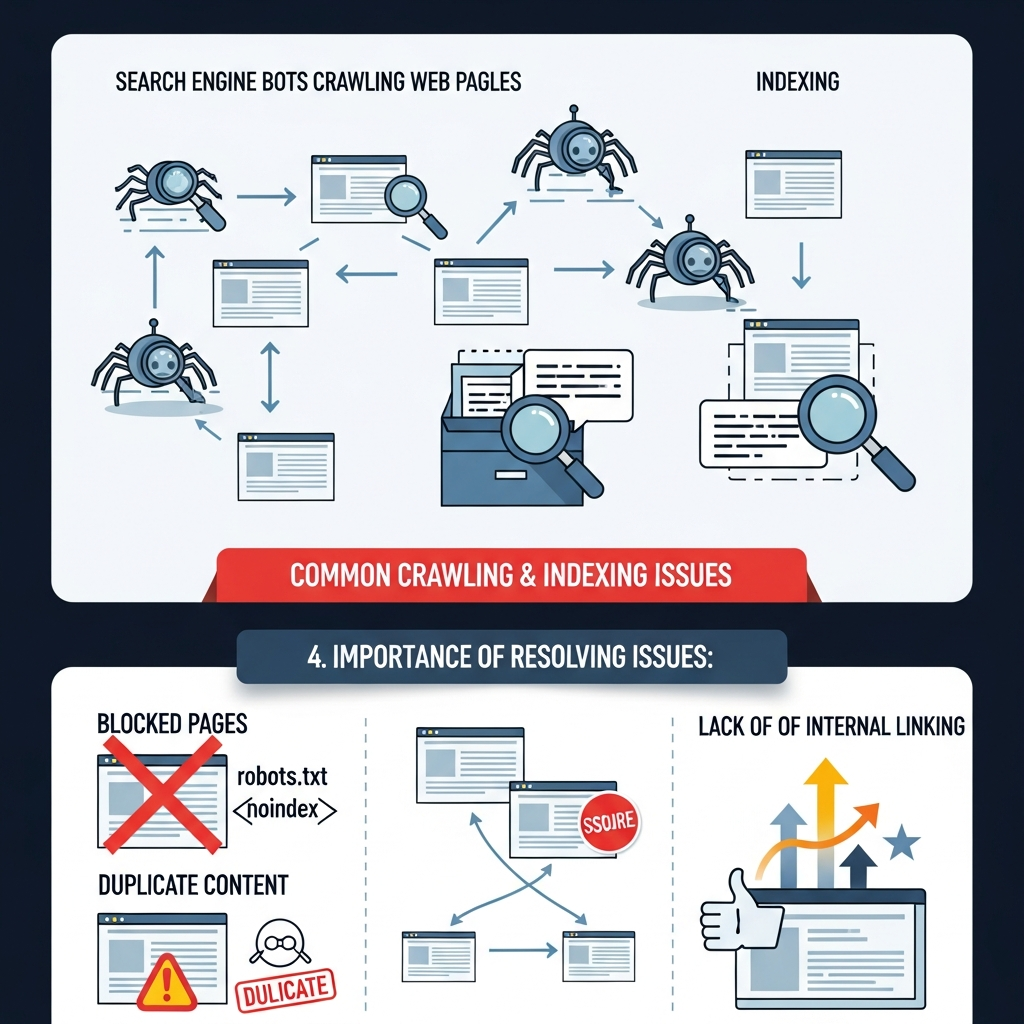
An SEO audit is basically a complete review of a website. It looks at structure, content, performance, and visibility in search results. Anything that blocks those bots can affect ranking. Search engines use bots to read pages. Many people think SEO is just about keywords. The real performance is the sum of many small details working together. The first step in learning how to do an SEO audit is always understanding how a website behaves in search systems.
Website indexing and crawling check
Search engines crawl a website first and then store pages in their index. When you block crawling, pages never appear in search results. When conducting an audit, one of the most important things to look for is whether or not every important page crawls properly. Sometimes pages are simply hidden by settings or mistakenly blocked. The other thing that can cause indexing problems is duplicate content or lack of page linking. Resolving these problems will improve your visibility over time.
Health of the website (technical)
One of the biggest reasons websites don’t rank is technical difficulties. Visitors don’t wait for pages to load, so a slow website can quickly lose people. Big images, heavy scripts, and poor hosting can slow down performance. When you are learning how to do an SEO audit, checking speed is always an important step. Fast loading speed on mobile and desktop is a must for a website. A smooth experience improves user experience, which in turn supports ranking indirectly.
Performance of users on mobile
The majority of users surf the web on mobile devices. This means that mobile experience is crucial for SEO. Users leave fast if a website does not scale well to small screens. Make sure the content is legible without zooming and the buttons are easy to tap. The layout should remain clean and simple. Testing on mobile devices is a crucial part of any SEO audit, as search engines also consider mobile-friendly design when ranking pages.
Page content structure
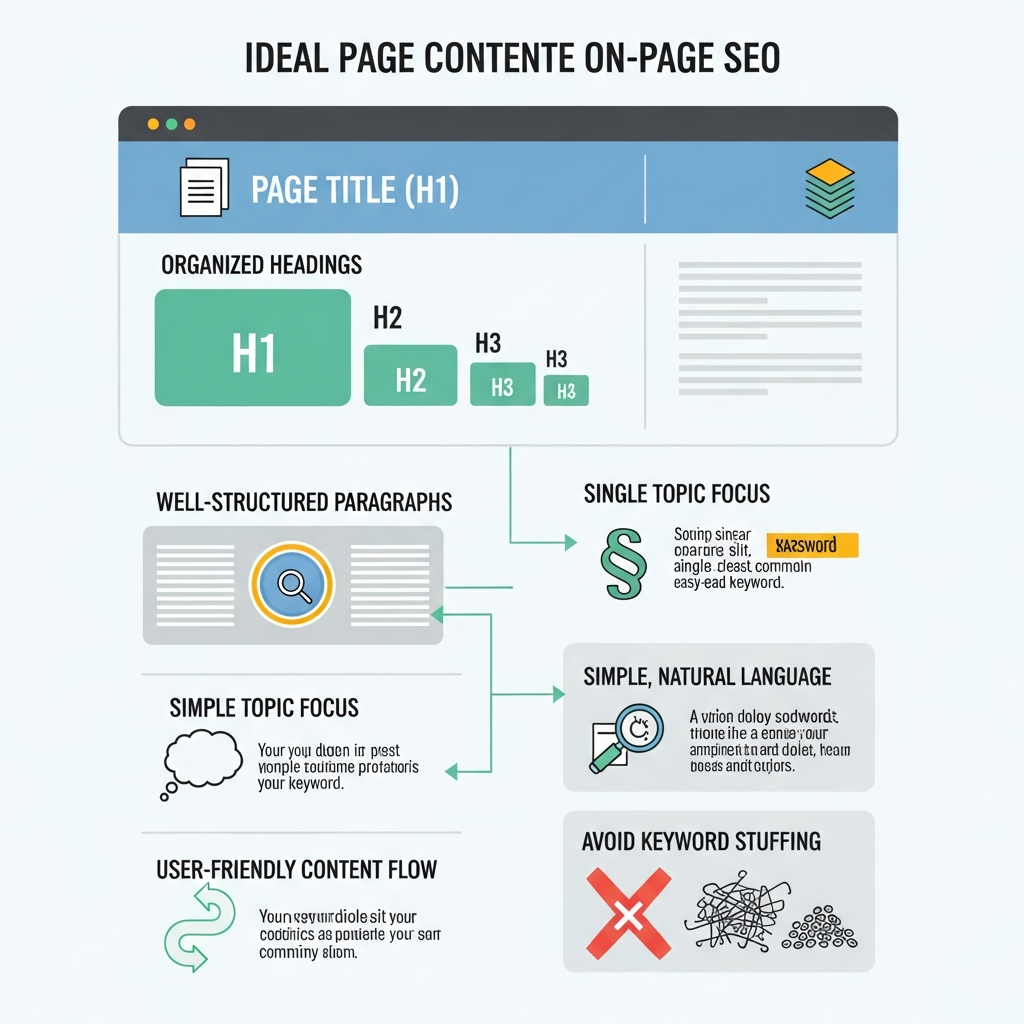
On-page SEO focuses on how to write and organize the content on each page. Titles, headings, and paragraphs help search engines understand page topics. Ranking, when structure is unclear, is a challenge. Each page should focus on one topic, and that topic should be explained in simple language. When doing SEO audit work, reading content like a normal visitor can help you find unclear sections. Content should be a natural flow without forcing keywords into every sentence.
Optimizing Keyword Usage and Placement
Keywords help search engines to pair content with search queries. But they have to be used in a balanced way. Using too much can make the content sound unnatural, while using too little can make it harder to understand. When learning how to do an SEO audit, a key thing to look at is the placement of keywords in the titles, descriptions, and main text. Related words also help enhance meaning. The goal is to naturally support comprehension of the topic, without repeating keywords.
Internal linking among pages
Internal links link to different pages on a website. They direct visitors from one topic to another and help search engines understand structure. If you do not link important pages correctly, they might not get traffic. When you audit, you can use internal links to check how well your content connects. A good linking structure aids navigation and spreads visibility throughout the site. It also helps users discover related information without effort.
Review of backlink quality
Backlinks are links that come from other websites to a specific page. They are trust signals. Not all backlinks are good ones. Some are from low-quality sites and can damage performance. An SEO audit includes checking the origin of the backlinks and whether they are relevant. Backlinks are high quality when they come from authoritative and relevant sites. Removing harmful links can improve the overall authority and help rankings grow in a stable way.
Content Quality & Value Check
Content is among the strongest ranking factors. Pages need to be helpful and clear. Too short or repetitive content may not perform well. In the process of an SEO audit, you should check the value of each page. It should answer real questions and help users learn more about the topic. When learning how to do an SEO audit, content review is one of the most important steps because it directly affects engagement and trust.
Duplicate content and thin content issues
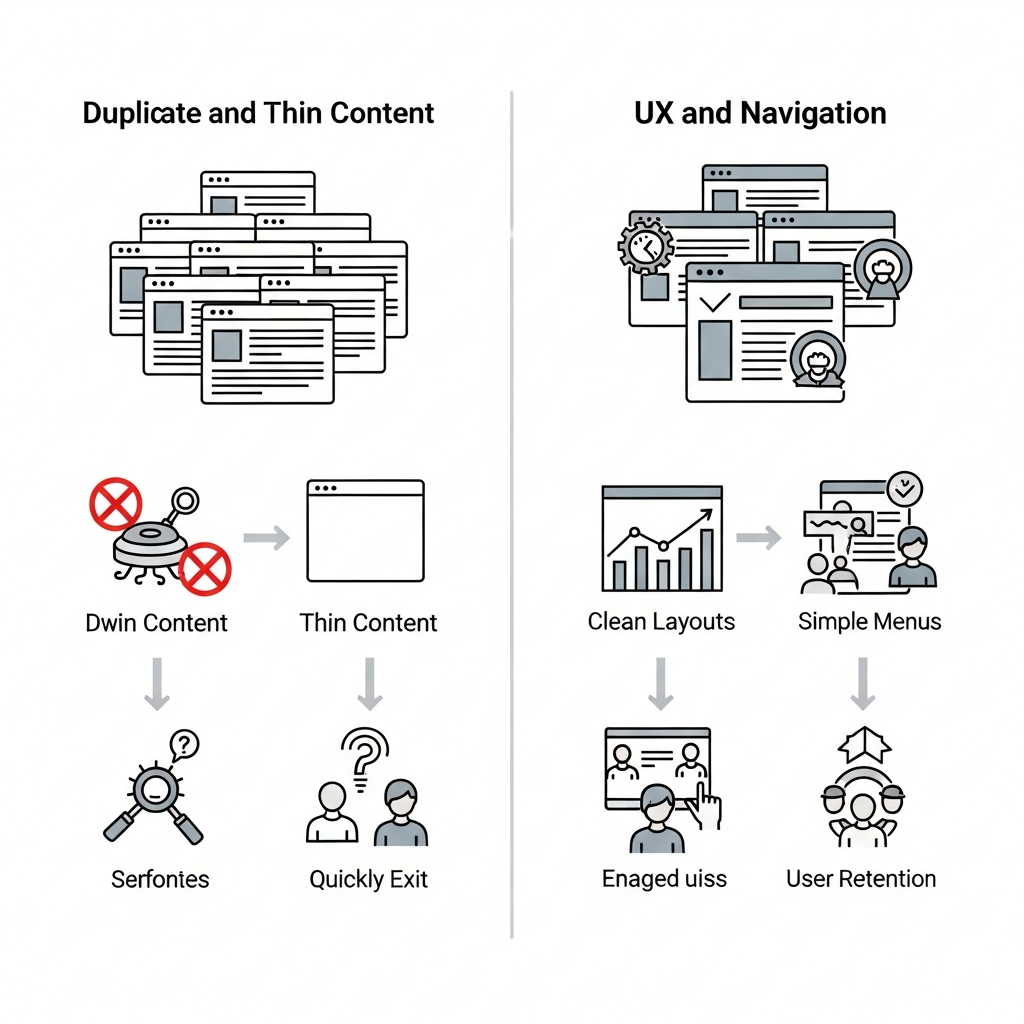
Duplicate content is when you have identical or very similar text on more than one page. This confuses search engines and can dilute ranking strength. Thin content refers to pages with very little useful information. Both of these issues are detrimental for SEO. An audit helps identify these problems so we can improve or remove them. Strong content always feels original and meaningful to the reader.
UX and navigation
User experience is a big factor in website success. Visitors leave a site quickly if they find it confusing. A clean layout, simple navigation, and readable design keep users engaged. Search engines also monitor user behavior on a site. If people are staying around longer, that’s a sign that content is useful. If you are doing SEO audit checks, watching how users navigate through the pages can help you spot design problems that are affecting your performance.
Page speed and loading behaviour
Page speed affects ranking and user satisfaction. Even if the content is satisfactory, a slow page can reduce traffic. We identify performance issues by checking load time during an audit. Common reasons for slow speed include unoptimized images and unnecessary scripts. Faster load times lead to smoother browsing and improved rankings over time.
Meta tags and page info
Meta titles and meta descriptions tell search engines what the page is for. They are also visible in search results. If they are missing or unclear, you might experience a decline in click performance. Every page needs a descriptive title that reflects what it contains. Short description of the page. Checking meta tags is a basic but important step if you are keen to learn how to do an SEO audit.
Error pages and broken links
Broken links lead to pages that are no longer there. They cause a negative user experience and waste crawl budget. Properly fix or redirect error pages. During the SEO audit process, scanning for broken links helps keep the site healthy. A clean structure, error-free, improves trust and usability for both users and search engines.
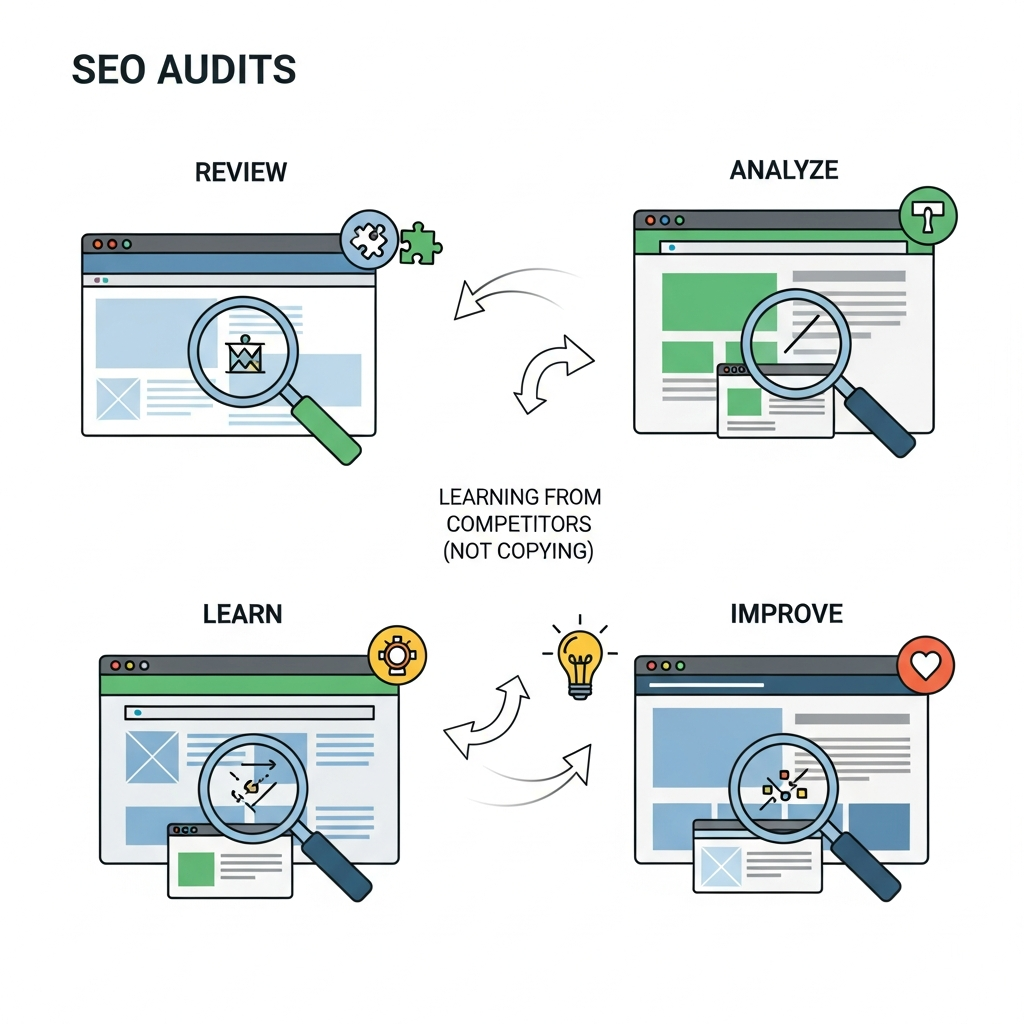
Review competitor comparison
Reviewing the websites of competitors helps you understand what is working in the same niche. It shows you what kind of content performs well and how other sites lay out their pages. It doesn’t mean copying ideas, but learning patterns. Competitor analysis will help you find gaps in content and opportunities for improvement when practicing how to do SEO audits.
Regular seo auditing practice
An SEO audit is not something you do once and forget about. Websites change over time as they add new content and older pages become out of date. Routine inspections are helpful in maintaining a stable performance. Every few months, do audits to catch problems early. This habit supports long-term improvement and keeps search visibility strong.
Bug fixing by priority
Once you identify the problems, it is important to address them in the correct order. We need to resolve the technical problems that prevent indexing first. Then, we will focus on speed improvements and structural fixes. Then content updates. Working in an organized manner prevents confusion and helps you get better results faster. Each fix should support better visibility or user experience
SEO audit often missed extra important points
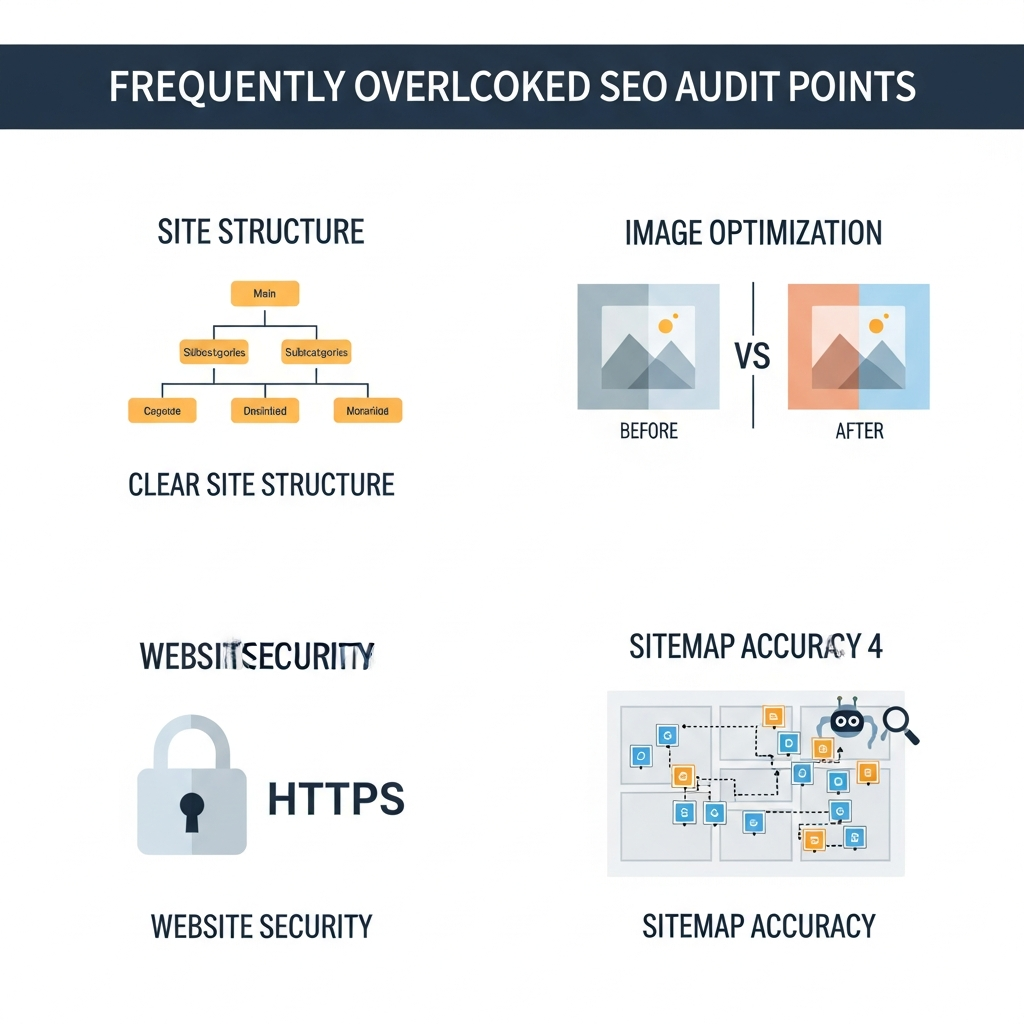
People don’t realize how important site structure is. A clear hierarchy helps search engines to understand which pages are most important. Ranking is unstable if structure is messy.
Another is image optimization. Large images slow down websites and hurt performance. Compressing images makes things go faster, but you don’t have to sacrifice quality.
Furthermore, security plays a role. Websites with secure connections inspire more confidence. Search engines prefer secure websites to unsafe ones.
Another minor but helpful check is sitemap accuracy. A comprehensive sitemap lets search engines easily find all important pages. If the sitemap is old, indexing is slow.
SEO audit process final understanding
An SEO audit is a comprehensive review of a website from several perspectives. It contains technical health, content quality, backlinks, structure, and user experience. All parts work to affect ranking. A weak area can drag the overall performance down. A thoughtful, consistent audit process builds a strong and stable website over time.