
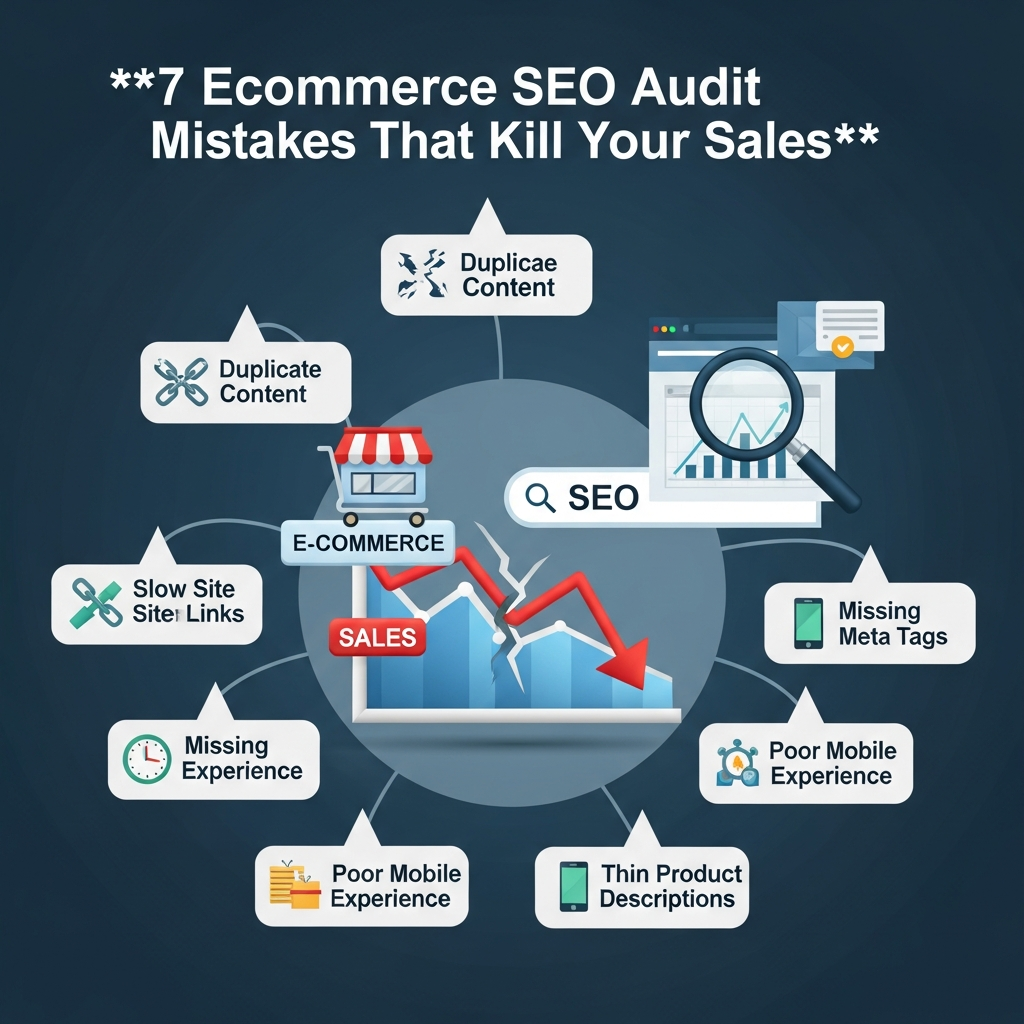
It is not as simple as it may seem to run an online store. Some stores get traffic every day but still struggle to make sales. In most cases, the website hides the real issue. That is where an e-commerce SEO audit becomes important. A proper e-commerce SEO audit helps find the problems that stop products from ranking and prevent customers from buying.
A full e-commerce SEO audit can improve traffic quality, user experience, and conversions. It also helps search engines understand the website better. Still, many store owners ignore small SEO mistakes that slowly hurt performance. These issues may look minor in the beginning, but over time they damage visibility, rankings, and sales badly.
Here are 7 common mistakes that can silently damage an e-commerce business.
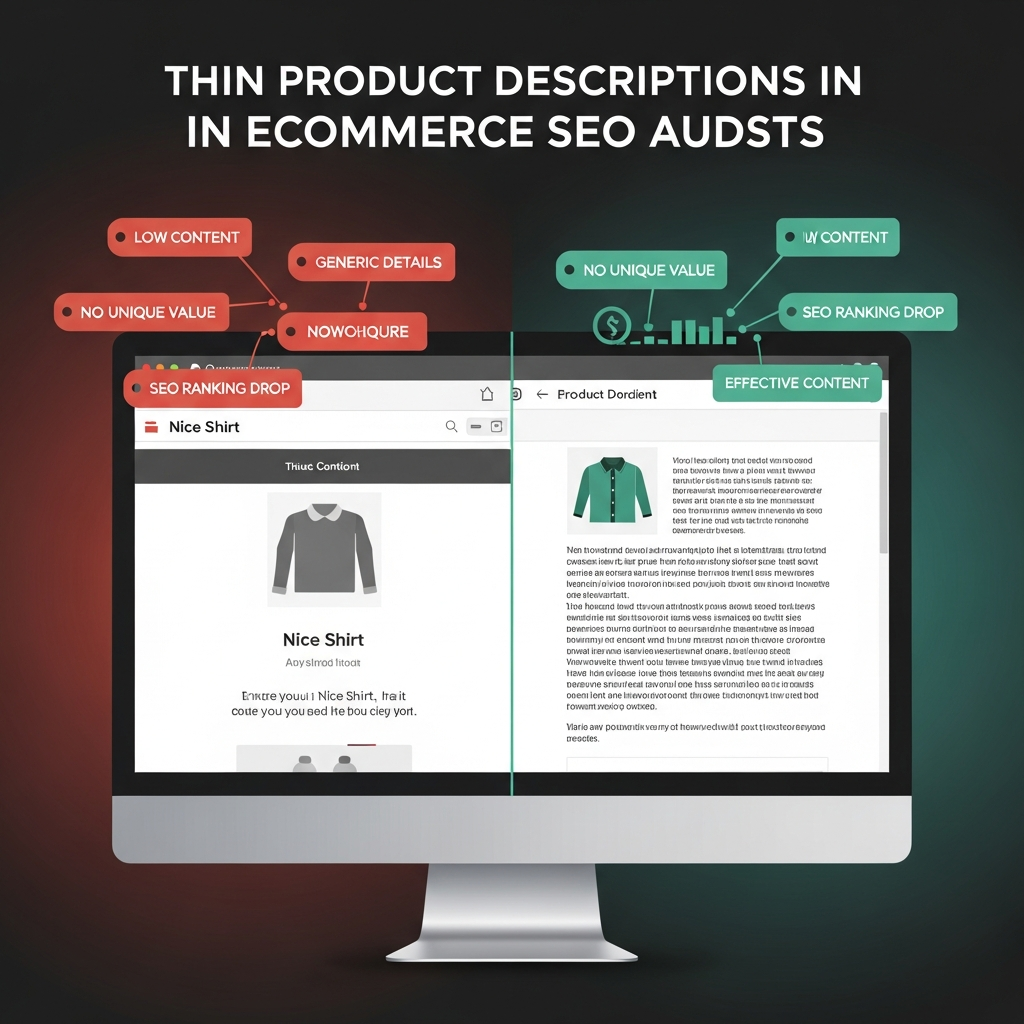
Thin Product Descriptions in Ecommerce SEO Audit
A common mistake is to use short or copied product descriptions. Some stores add only a few lines to what they sell. Others just lift text straight off the suppliers.
Search engines favor unique content. It’s difficult to rank if hundreds of websites have the same description. Product pages have less visibility in search results.
Customers also want useful information prior to buying. They look at features, sizes, materials, and usage info. If the content is empty, trust erodes quickly.
Always be sure to look at product page content in an e-commerce SEO audit. Every product needs natural, clear descriptions that sound like a person.
Online shoppers scan quickly, so short paragraphs are more effective. Rankings and conversions both naturally benefit from clear writing.
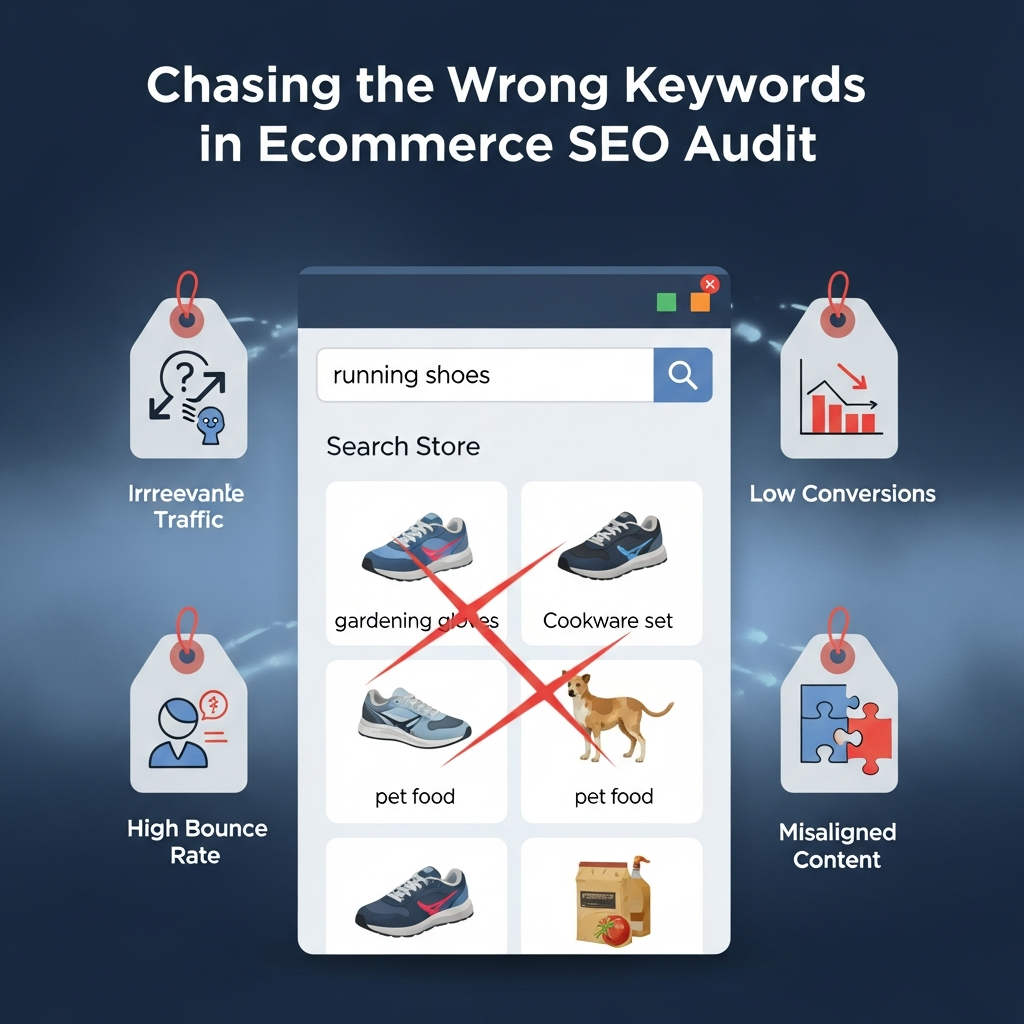
Traffic doesn’t always translate into sales. Sometimes visitors will arrive at a website and never make a purchase. Usually, this is because of targeting the wrong keywords.
Some keywords are just for information. Some are interested in buying. A lot of e-commerce stores miss these opportunities.
For example, someone searching for “best running shoes for flat feet” is more likely to purchase than someone searching for “history of running shoes.”
One of the things an e-commerce SEO audit should check is if pages match user intent properly. Category pages should be focused on buying related searches. “Blog posts can naturally target informational terms.
Relevant traffic is more than random traffic. Better keyword targeting typically gets you better conversion rates faster.
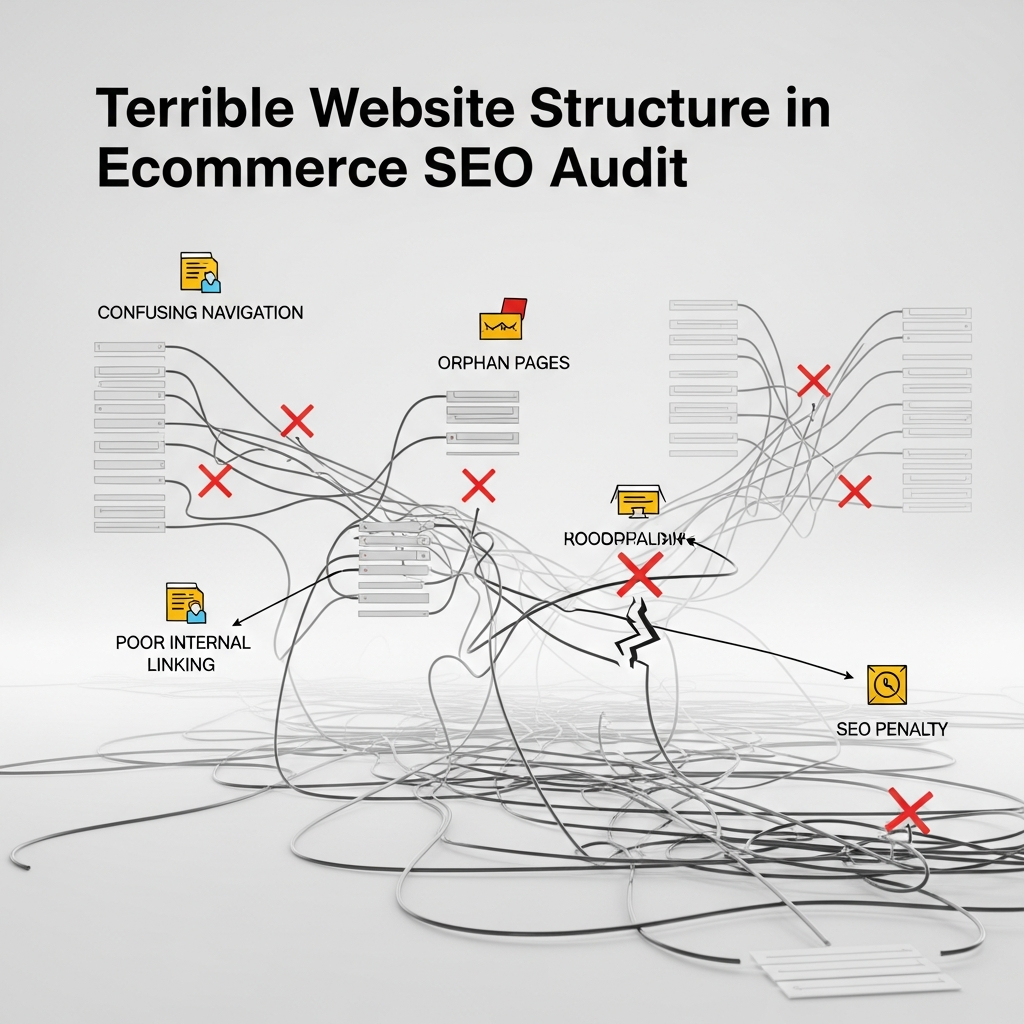
Terrible Website Structure in Ecommerce SEO Audit
A messy website structure is problematic for both search engines and users. Adding too many categories and pages to some e-commerce sites can make them messy.
Straightforward products should be easy for visitors to access. If navigation is confusing, people leave before they can explore.
Search engines also have a difficult time crawling poorly structured websites. Important pages that are unindexed or hidden.
An e-commerce SEO audit should be a careful review of navigation, category structure, and internal linking. URLs must be simple and human readable.
A clean website organization is beneficial for the user experience. It also helps search engines understand the store better.
If your site has small structure problems, it will rank lower and sell less over time.
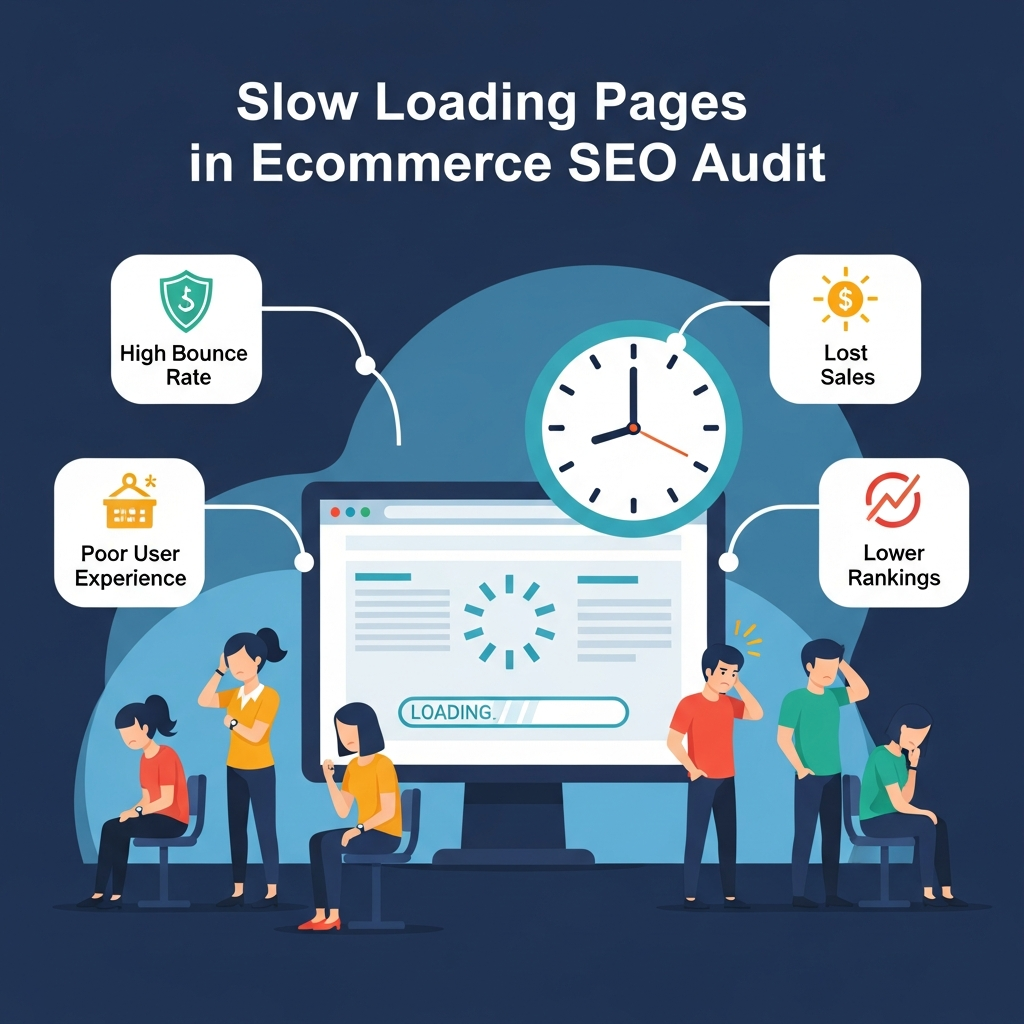
The speed of the website is everything. Fast pages make visitors delighted. Most users will leave a site if it is slow to load.
E-commerce websites load slowly mainly because of oversized images, redundant plugins, and poor hosting.
Search engines consider page speed among the many factors when ranking websites. Slow stores struggle to compete in search results.
Mobile and desktop testing speed should be part of an e-commerce SEO audit. Mobile performance is critical today because most shoppers use phones.
Product and checkout pages should load without any problems. Faster websites, by default, mean better shopping experiences and better conversions.
Even a little delay can reduce sales significantly.
Broken Links & Technical Issues
Technical SEO issues often hide in the background, so people overlook them. However, they can do a lot of damage to an e-commerce website.
Broken links are detrimental for the user experience. Customers click pages and get errors instead.”
Another common problem is duplicate content. Product filters and variations can sometimes result in multiple versions of the same page.
Search engines get confused as to which page should rank.
An e-commerce SEO audit should regularly check for crawl errors, redirects, duplicate pages, and sitemap issues.
Meta titles and descriptions also need some love. Click rates from search results are lower if metadata is missing or weak.
Neglecting User Experience
Some stores only look at rankings and forget about customer experience. This mistake is very detrimental for the conversions.
Visitors want websites that are simple and straightforward to use. Cluttered layouts and aggressive popups tend to push people away.
An e-commerce SEO audit needs to carefully examine user behavior. High bounce rates are often indicative of issues with the experience.
Product pages need to be clean and organized. Reviews, trust signals, and clear product information make customers feel comfortable while purchasing.
Search bars and filters also have to work seamlessly. If people don’t find products quickly, they leave fast.
Positive user experience will naturally lead to better engagement. It also helps search engines understand that the site is providing value to its visitors.
In Conclusion
An online store needs more than exceptional products to be successful. Search visibility, technical health, and user experience affect sales growth.
Most e-commerce SEO mistakes take time to show their effects. Rankings slide down, and conversion rates become less strong with time. And that is why a regular e-commerce SEO audit is important for every online store.
Thin content, slow speed, poor structure, wrong keywords, and technical problems can quietly damage revenue. The good news is that most of these problems are fixable.
Small improvements can make big results. A fast-loading, easy-to-use, and informative website is far more likely to rank higher and generate sales.