
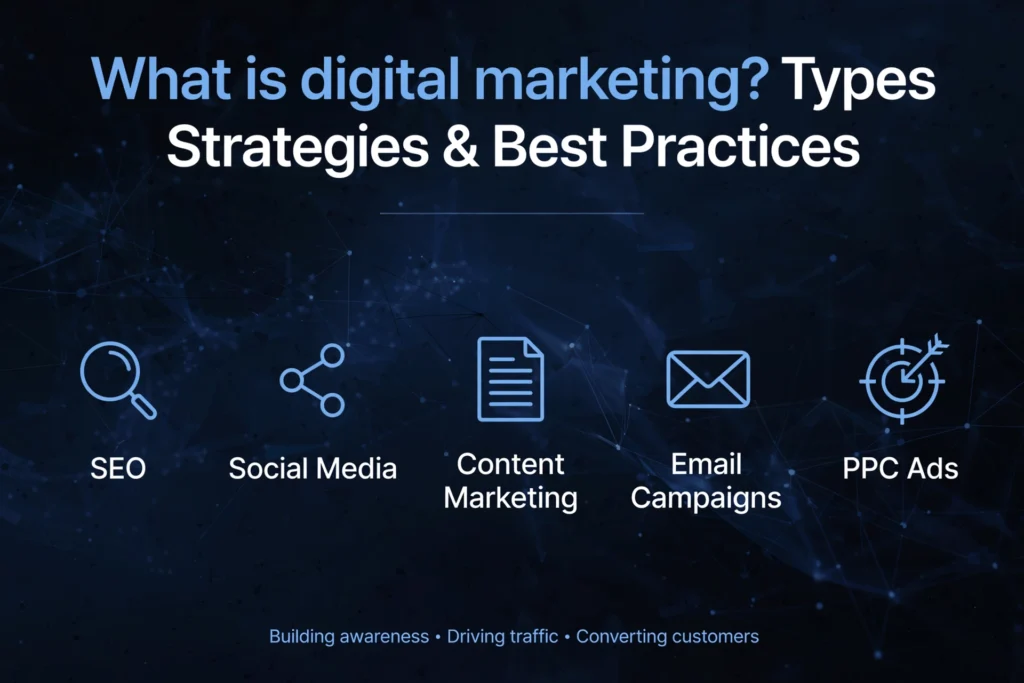
Every business needs digital marketing to get new leads and really grow their business online. So, what is digital marketing? Allow us to break it down for you in this guide, What Is Digital Marketing? Types & Strategies & Best Practices You will learn what works and what types, strategies, and practical tips will help you to get better leads. We’ll walk you through the digital marketing process and show you how to use it for your business today. Each chapter gives you practical procedures you can start using immediately.
SEO vs. PPC: What’s the Difference?
Search engine optimization or SEO is the process of making your website appear in the Google results without paying for ads. PPC is pay per click. That’s when you pay for each visitor that clicks on your ad that appears at the top of search results. PPC is better for quick wins or time-sensitive offers; SEO is a longer-term strategy that builds consistent organic traffic. Both get you in front of customers, but the timing and the costs are entirely unique.
- SEO makes your website appear in free search results.
- PPC means you pay for every click on your ad at the top of search results
- SEO is long-term growth, while PPC is instant results.
- The cost and timing of the two are entirely unique.
- Knowing both is important for good marketing.
How to Build a Successful Content Marketing Strategy
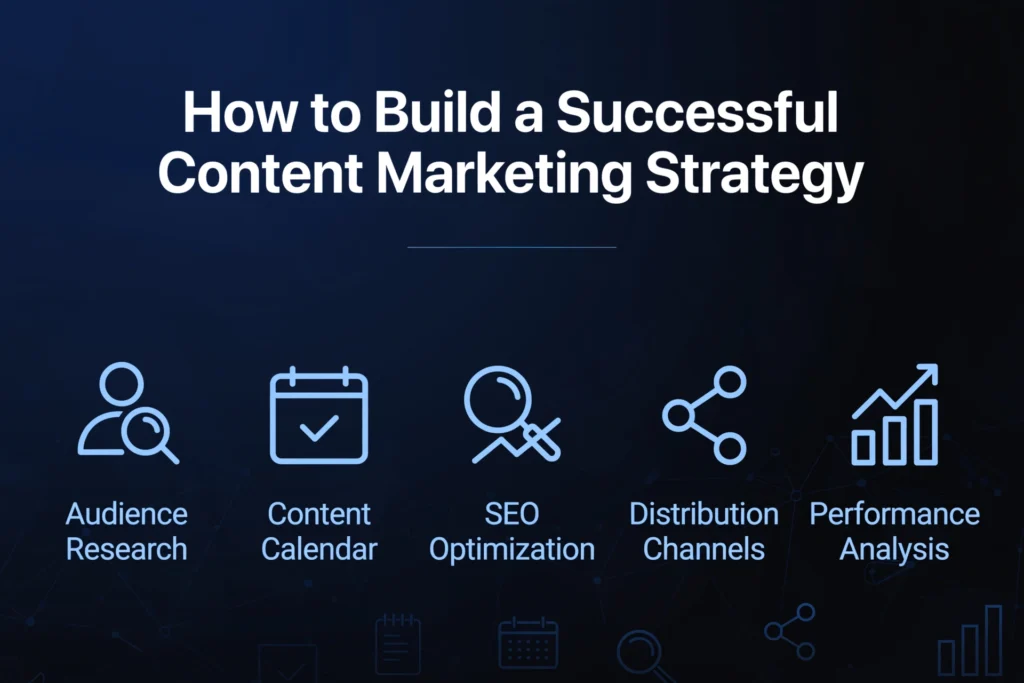
Think about your business goals and what your audience actually wants to know or solve. Find out what your customers want to read about and build your editorial calendar around those topics. Each article, video, or guide that you publish must educate, inspire, or solve an actual problem for your audience. It’s about consistency, so pick a schedule and see what your audience responds to over time. A content plan that suits your audience’s needs builds trust and helps you attract more leads to work with you.
- Define the needs of your audience and your business objectives.
- Create content on topics that your target audience is searching for.
- Each piece of content should educate, inspire, or solve a problem.
- The key is consistency, so stick to a regular schedule.
- Well-planned content builds trust and attracts qualified leads.
Top Tools for Monitoring Digital Marketing Performance
Want to know who is visiting your website and what they’re doing on it? Google Analytics is a must-have. Tools like SEMrush or Ahrefs will tell you your search rankings and who is linking to you. Social tool dashboards like Hootsuite show you what is working on Facebook, Instagram, and more. These tools give you real numbers so you can see what is working and what you need to improve.
- Google Analytics tracks your website visitors and what they do.
- SEMrush and Ahrefs are tools to check your search ranking and backlinks.
- Tools such as Hootsuite measure your social media success.
- Tools provide real numbers to indicate what’s working and what needs to be improved.
- Constant tracking leads to better marketing results.
Online Marketing: Finding Your Target Audience?
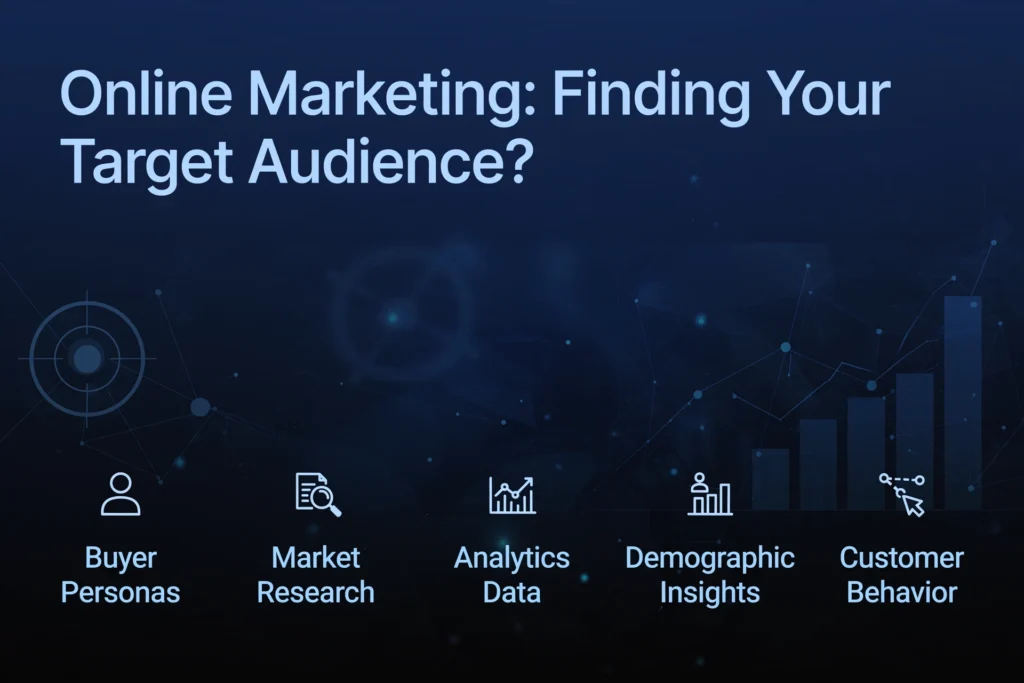
Check out your current customers and see what they have in common—their age, location, interests, or problems. Conduct surveys and one-on-one conversations to understand what is important to them and where they are struggling. Develop some “buyer personas” that describe who your ideal clients are, what drives them, and what challenges they face. Write the copy and content for your site that speaks directly to these personas and their questions. The more you know about your audience, the more effective your marketing will be.
- Look at your current customers’ data.
- Learn about your audience through surveys and interviews.
- Create buyer personas for your ideal clients.
- Tailor your content and messaging to this audience.
- Target marketing generates better quality leads.
What are the latest trends in social media marketing?
Short-form videos like TikTok and Instagram Reels are blowing up, getting tons of new followers. People want the authentic stories, behind-the-scenes views, and honest questions and answers and not just the slick advertising and sales pitch. Social commerce is booming, enabling users to buy right from a post and never leave the app. Don’t forget that small, trusted influencers are your friends. Use interactive polls or Q&A’s to make your brand stand out.
- TikTok and other short-form video apps like Reels are getting more popular.
- “People like behind-the-scenes stuff, real stories.
- Social commerce lets users shop straight from posts.
- Micro-influencers and interactive content will make your brand stand out.
- Following trends increases reach and engagement with your audience.
How Often Should You Send Marketing Emails?
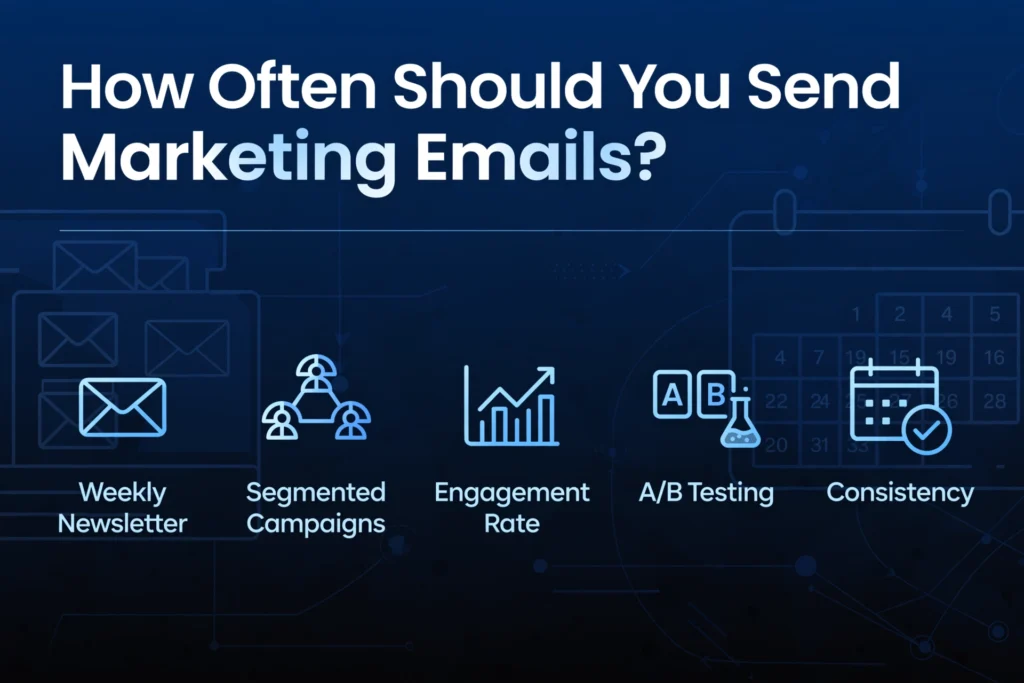
Send an email once a good week. This will make your subscribers think of you but not in an annoying way. Watch your open and click-through rates—if they’re declining, you may be sending either too often or not often enough. Good emails give you something of use or interest—tips on how to do things, special offers, or news. Segment your list and send out messages that speak to each group. Personalize as much as possible. Ensure your email timing is perfect with help from subscriber feedback.
- Ideally, shoot for one valuable email per week.
- Vary frequency according to open and click rates.
- Every email needs to offer value—tips, deals, or news.
- Segment your list and send out personalized messages.
- Timing is important and should be based on feedback from subscribers for best results.
Digital Marketing Mistakes to Avoid
Here are some. Without clear goals, it’s very difficult to know if your marketing is really working. You will quickly lose visitors if your site or your ads are not mobile-friendly. Not knowing what will work best is wasting money and ignoring analytics. Jumping on every new trend that comes along without a plan will dilute your message and confuse potential leads. Avoid these mistakes to stay focused and effective.
- When the goals are unclear, it is difficult to measure success.
- No Mobile Optimization.
- Ignoring analytics is wasting budget and missing improvements.
- Jumping on every trend without a strategy dilutes your message.”
- Avoid These Mistakes. Stay focused and effective.
How do you measure the ROI of digital marketing efforts?
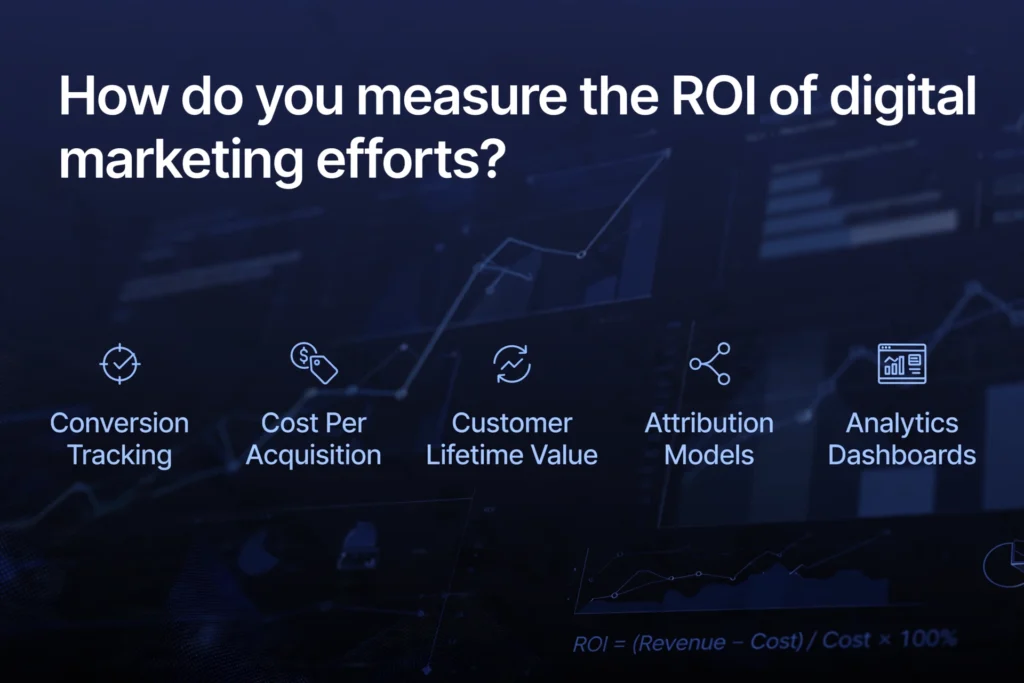
Set a goal for each campaign. This could be selling, getting people to call, or signing up for email. Analytics can help you follow a customer’s journey from that first click to the final action, so you really know which channels are delivering. Total revenue earned divided by the total cost of running the campaign (ads/content creation, etc.). Regularly check your numbers to see what is working and what needs your attention. ROI measurement helps you invest only in activities that actually grow your business.
- Define a specific touch campaign, such as a sale, signup, or call.
- Use analytics to monitor the customer journey.
- Revenue from the campaign compared with total costs.
- Review data regularly to find the best strategies.
- ROI measurement allows you to spend your budget wisely.
Benefits of Influencer Marketing
Influencer marketing allows you to use the trust that an influencer has built with their audience to lend credibility to your message. When you find the right influencer, you’re talking to people who are already interested in what you do. They can help you find new leads by quickly bringing more of the right traffic to your website or social pages. To get real results, choose an influencer whose style and audience match your brand. Adding influencer marketing can really accelerate lead generation and trust.
- Influencers provide your brand with audience trust.
- The right influencer is reaching an audience that matters to your business.
- Influencers can drive targeted traffic and leads quickly.
- Ensure the influencer’s style aligns with your brand.
- Influencer marketing accelerates creation of trust and leads.
How can small businesses compete with larger brands in online marketing?
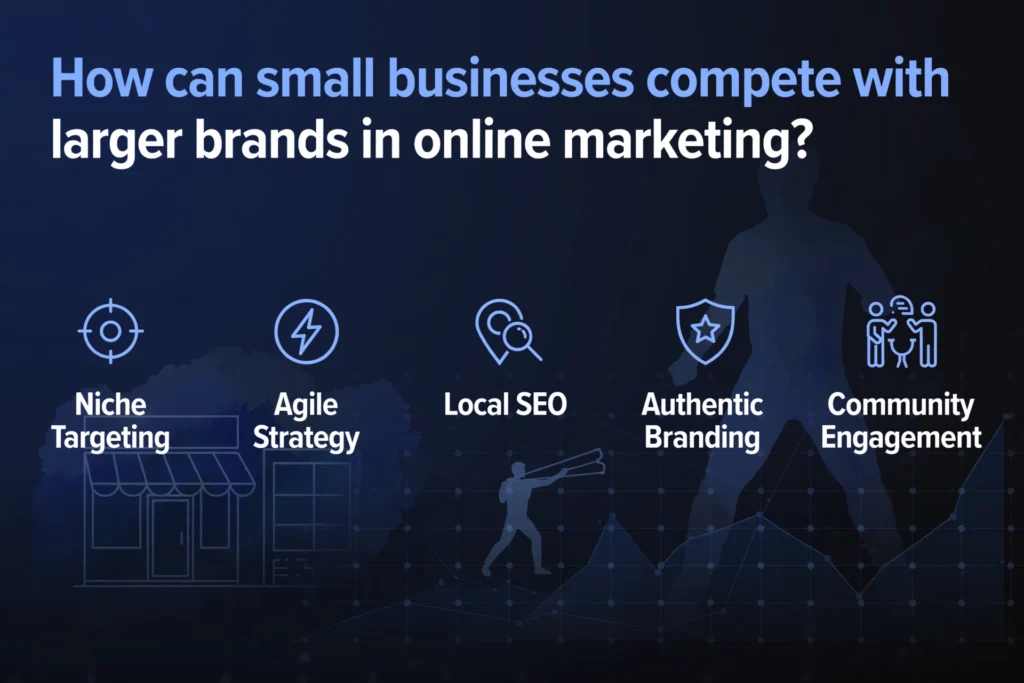
The secret to winning at digital marketing for small businesses is to be more personal and faster than the big-name brands. Reply fast. Build relationships with your customers; treat them like people, not as numbers. Local SEO helps people in your area find you in searches and makes you the expert they turn to in your community. Explore niche topics or styles that may be overlooked by larger brands and allow your personality to shine through. Small businesses can be unique and successful online, with adaptability and authenticity.
- Small businesses can be more personal and act faster.
- The key is good customer relations and timely feedback.
- Achieve visibility in local search results through local SEO.
- Emphasize unusual subjects and creative material.
- Small businesses compete with adaptability and authenticity.
Conclusion:
If you want to be successful in digital marketing in the long term, you need to know your audience and have the right mix of strategies that will help you reach your goals. In What Is Digital Marketing? Types, Strategies & Best Practices,
We’ve shown you how to use SEO, PPC, content, and influencer partnerships—always tracking your results and adjusting your approach as you go. Steer clear of the common pitfalls, concentrate on what matters most to your customers, and allow data to guide your choices. Partner with a hands-on SEO agency for the lift and expertise you need for real growth. Want to get better quality leads? Reach out today and let’s make it happen!