

Social media has become one of the most powerful marketing tools for small businesses. In 2026, customers use platforms like Facebook, Instagram, LinkedIn, TikTok, and YouTube to discover products, compare brands, read reviews, and make buying decisions.
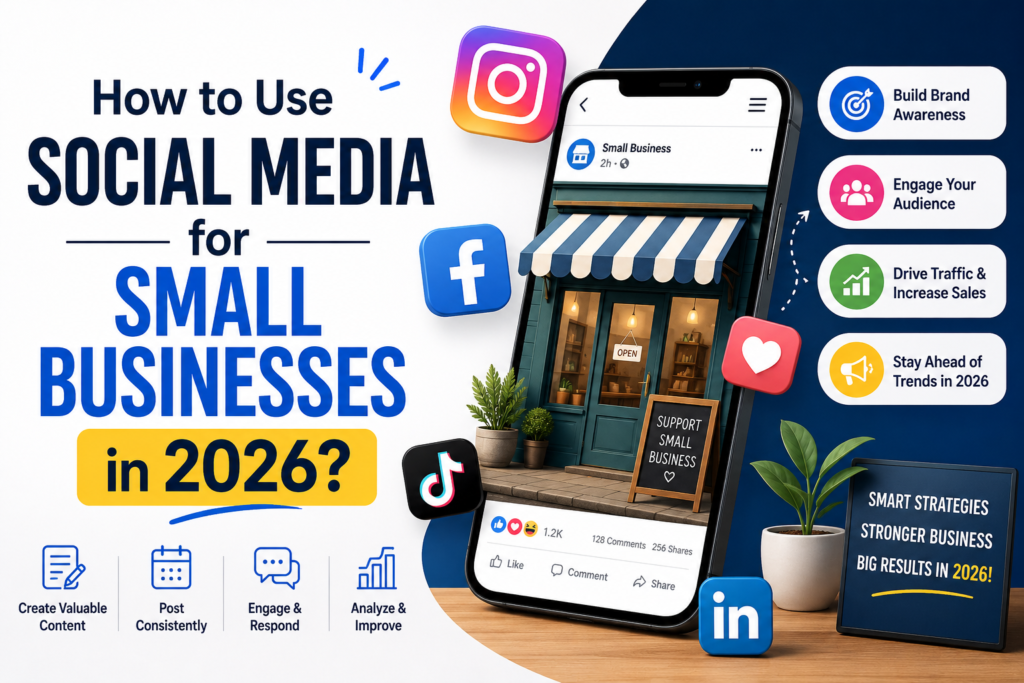
A strong social media strategy helps businesses build trust, increase visibility, generate leads, and improve sales. With AI-powered search, voice search, and recommendation algorithms becoming more advanced, businesses need a smarter approach to social media marketing.
This guide explains how to use social media for small business success in 2026.
What Is Social Media Marketing for Small Businesses?
Social media marketing is the process of using social platforms to promote products, services, and brand awareness.
Main Goals
| Goal | Benefit |
|---|
| Brand Awareness | More people discover your business |
| Customer Engagement | Build relationships with customers |
| Lead Generation | Attract potential buyers |
| Sales Growth | Increase revenue |
| Customer Support | Improve customer satisfaction |
Example
A local bakery can use Instagram to share product photos, Facebook for promotions, and TikTok for behind-the-scenes videos.
Why Is Social Media Important for Small Businesses in 2026?
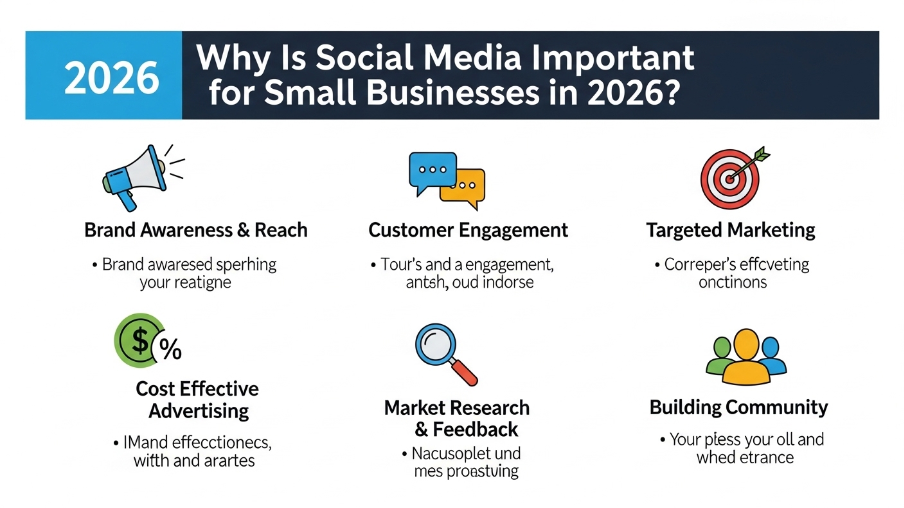
Social media is often the first place customers interact with a business.
Key Benefits
- Cost-effective marketing
- Direct communication with customers
- Increased brand visibility
- Better customer loyalty
- Faster customer feedback
- More website traffic
- Stronger local presence
Quick Fact
The best platform depends on your audience and goals.
| Platform | Best For |
| Local businesses and communities |
| Visual products and branding |
| B2B services and professionals |
| TikTok | Brand awareness and younger audiences |
| YouTube | Tutorials and long-form content |
| Fashion, home decor, and DIY niches |
Tip
Focus on one or two platforms first instead of trying to manage every platform.
A successful strategy starts with clear goals.
Step-by-Step Process
- Define business goals
- Identify target audience
- Choose the right platforms
- Create a content plan
- Post consistently
- Monitor performance
- Improve based on data
SMART Goal Example
Increase Instagram followers by 20 percent within three months.
What Type of Content Should Small Businesses Post?
Content should educate, entertain, and build trust.
Content Ideas
- Product demonstrations
- Customer testimonials
- Behind-the-scenes videos
- Industry tips
- FAQs
- Tutorials
- Success stories
- Promotions
- Employee highlights
- User-generated content
Content Mix
| Content Type | Percentage |
| Educational | 40% |
| Engaging | 30% |
| Promotional | 20% |
| Community Content | 10% |
How Often Should a Small Business Post on Social Media?
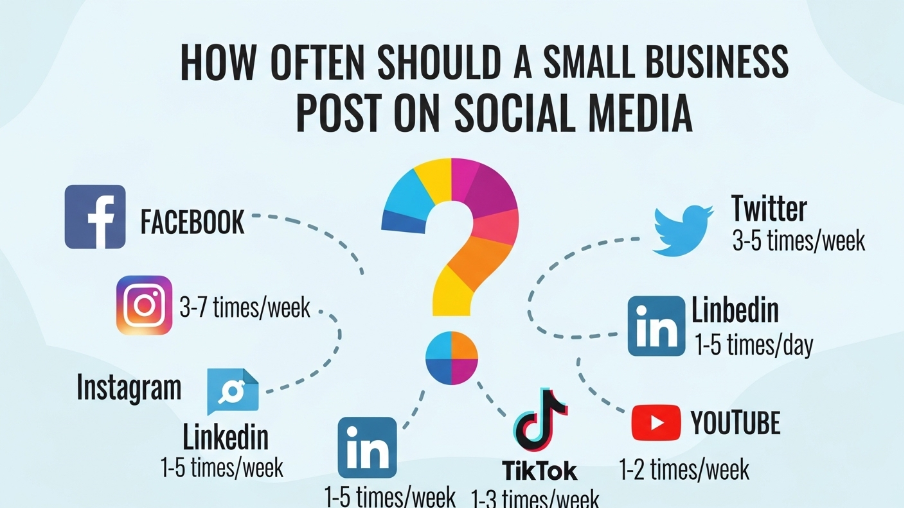
Consistency matters more than posting constantly.
Recommended Frequency
| Platform | Posting Frequency |
| 3–5 times weekly |
| 4–7 times weekly |
| 3–5 times weekly |
| TikTok | Daily if possible |
| YouTube | 1–2 videos weekly |
Tip
Create a content calendar to stay organized.
How Can Small Businesses Increase Engagement?
Engagement grows when businesses actively interact with followers.
Best Practices
- Respond to comments
- Reply to messages quickly
- Ask questions
- Run polls
- Share user-generated content
- Host giveaways
- Create interactive stories
- Use trending topics appropriately
Example
A restaurant can ask followers to vote on a new menu item.
AI tools help businesses create better content and save time.
AI Benefits
- Content creation assistance
- Caption generation
- Trend analysis
- Audience insights
- Automated scheduling
- Customer support chatbots
Popular Uses
- Creating content ideas
- Optimizing posting times
- Analyzing engagement patterns
- Personalizing customer experiences
Should Small Businesses Use Paid Advertising?
Yes. Paid advertising can accelerate growth when used strategically.
Benefits
- Reach targeted audiences
- Generate leads faster
- Increase website traffic
Popular Ad Platforms
- Facebook Ads
- Instagram Ads
- LinkedIn Ads
- TikTok Ads
- YouTube Ads
Tip
Start with a small budget and test multiple campaigns.
What Are the Biggest Mistakes to Avoid?
Many businesses struggle because they ignore basic social media principles.
Common Mistakes Checklist
- Posting without a strategy
- Ignoring audience engagement
- Inconsistent posting
- Over-promoting products
- Using poor-quality visuals
- Not tracking analytics
- Ignoring customer feedback
- Copying competitors
- Failing to adapt to trends
- Not optimizing profiles
Real-World Example
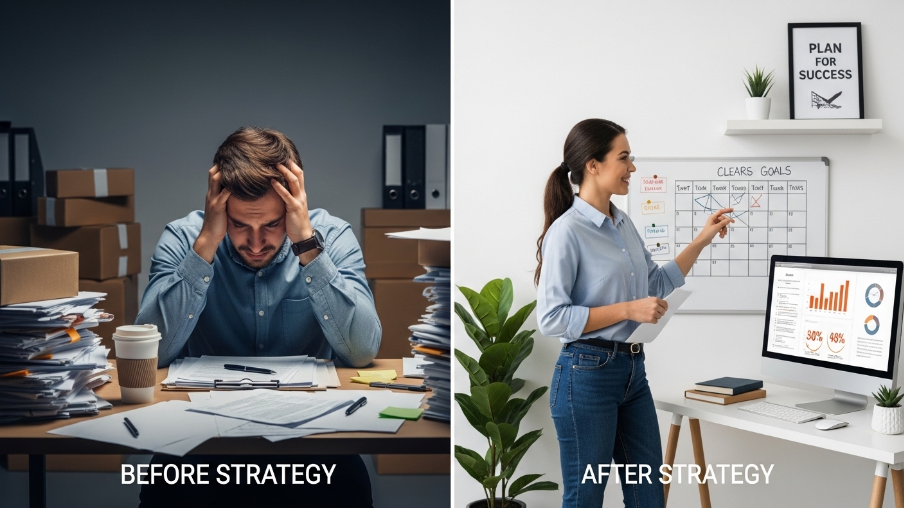
Before Strategy
A local fitness coach posted randomly and gained little engagement.
After Strategy
The coach:
- Posted educational videos
- Shared client success stories
- Used Instagram Reels
- Responded to comments daily
- Ran targeted Facebook Ads
Results
- More followers
- Higher engagement
- Increased website traffic
- More client inquiries
- Improved sales
Expert Tips for Social Media Success in 2026?
- Focus on audience needs first.
- Use short-form video content.
- Optimize profiles with clear business information.
- Encourage user-generated content.
- Monitor analytics weekly.
- Build community, not just followers.
- Use AI tools wisely.
- Test different content formats.
- Maintain consistent branding.
- Stay updated with platform changes.
Frequently Asked Questions
Q: What is the best social media platform for small businesses?
A: Facebook and Instagram work well for most local businesses, while LinkedIn is ideal for B2B companies.
Q: How often should I post on social media?
A: Consistency is key. Most businesses benefit from posting several times per week.
Q: Is social media marketing free?
A: Creating profiles is free, but advertising and advanced tools may require a budget.
Q: Can social media increase sales?
A: Yes. Effective social media marketing can generate leads, improve brand awareness, and increase conversions
Q: Should small businesses use AI tools?
A: Yes. AI can help with content creation, scheduling, analytics, and customer engagement.
Key Takeaways
- Social media is essential for business growth in 2026.
- Focus on platforms where your audience is active.
- Create valuable and engaging content.
- Use AI tools to improve efficiency.
- Track performance and adjust strategies regularly.
- Consistency and audience engagement drive long-term success.
Conclusion
Learning how to use social media for small business success is no longer optional. Social platforms help businesses connect with customers, build trust, generate leads, and increase sales.
The businesses that succeed in 2026 will focus on creating helpful content, engaging with their audience, using AI tools strategically, and continuously adapting to changing social media trends.
A clear strategy combined with consistent execution can turn social media into one of the most valuable growth channels for any small business.
Suggested Internal Links
- Social Media Marketing Guide
- How to Become a Social Media Manager
- Best Social Media Advertising Strategies
- Digital Marketing Trends 2026
- AI Tools for Marketing
Suggested External References
- Google Search Central
- Google Business Profile
- Meta Business Resources
- LinkedIn Marketing Solutions
- TikTok Business Learning Center
Pingback: What Are the Benefits of Social Media Marketing in 2026?