
Introduction
Search is no longer just about Google rankings.
In 2026, users get answers directly from:
Google AI Overviews
ChatGPT Search
Gemini AI
Perplexity
Copilot
This shift introduces a new SEO model: GEO in SEO (Generative Engine Optimization).
If your content is not optimized for AI systems, you may lose visibility—even if you rank on Google.
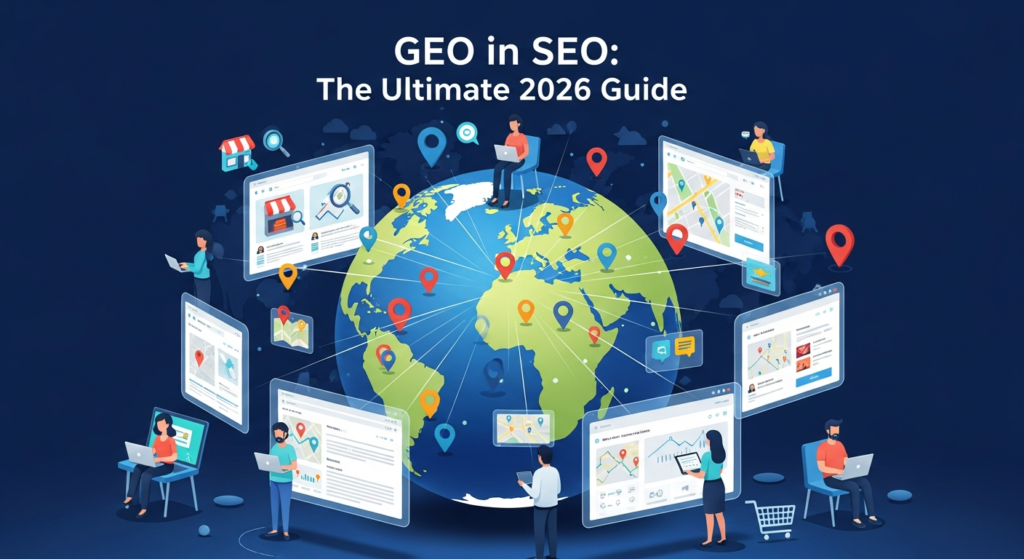
What is GEO in SEO?
GEO (Generative Engine Optimization) is the process of optimizing content so AI systems can:
- Understand it clearly
- Trust its accuracy
- Summarize it correctly
- Cite it in AI-generated answers
Unlike traditional SEO, GEO focuses on the following:
- AI visibility
- entity understanding
- structured answers
- conversational content
- EEAT signals
Why is GEO important in 2026?
Because search behavior has changed.
Users now:
- ask full questions
- trust AI-generated answers
- skip websites (zero-click searches)
Key impact:
- Less organic clicks
- More AI citations
- Higher competition for trust signals
What changed in Google’s latest updates?
| Update | Impact on SEO |
|---|---|
| AI Overviews | AI answers shown directly in SERP |
| Helpful Content System | Rewards human-first content |
| Core Updates | Stronger ranking quality filters |
| Spam Updates | Reduces low-quality AI content |
| EEAT Improvements | Trust becomes ranking factor |
| Entity-Based Search | Understands topics & relationships |
| AI Search Experience | Prioritizes structured answers |
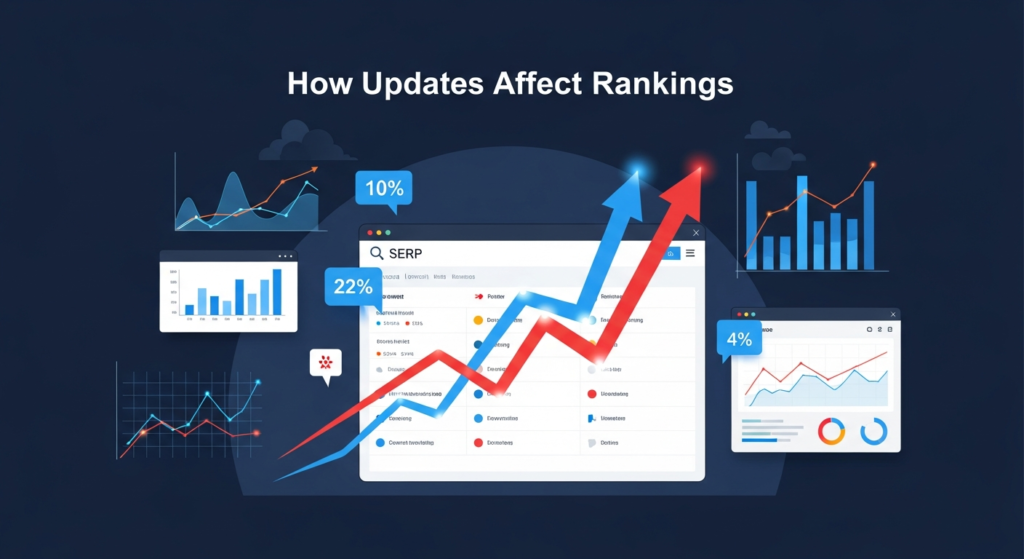
How do these updates affect rankings?
Websites are now evaluated based on:
- Authority of topic (topical authority)
- Entity relevance (brand + subject clarity)
- Content usefulness
- Trust signals (EEAT)
- Structured data quality
Ranking alone is not enough anymore
AI citation visibility is now equally important
What should businesses do now?

GEO Optimization Checklist:
- Write answer-first content (Q&A format)
- Build topical authority clusters
- Strengthen EEAT signals
- Add schema markup (FAQ, Article, Organization)
- Use entity-based SEO (brands, authors, topics)
- Optimize for conversational queries
- Improve internal linking structure
- Update old content regularly
- Focus on AI-readable formatting
- Add real examples & data
Biggest mistakes to avoid
GEO Mistakes Checklist:
- Writing keyword-stuffed content
- Ignoring EEAT signals
- Publishing generic AI articles
- Weak or missing schema
- No topical depth
- Not updating content after Google updates
- Ignoring entity relationships
- Writing long unstructured paragraphs
Real-World Example
Before GEO:
A blog publishes generic SEO articles:
- keyword-focused
- no structure
- no EEAT signals
Result:
- low visibility in AI search
- declining traffic
After GEO:
The same website improves.
- Q&A structure added
- author expertise added
- schema markup implemented
- entity-based content clusters created
Result:
- appears in AI Overviews
- higher trust signals
- improved organic traffic quality
Expert Tips for GEO (2026)
- Write short, direct answers
- Use question-based headings
- Add FAQ schema on every key page
- Build strong topical authority
- Use entity SEO strategy
- Include expert insights or quotes
- Optimize for voice search queries
- Add real-world examples
- Keep content updated regularly
- Focus on AI citation potential
Key Takeaways
- GEO = Generative Engine Optimization
- Focuses on AI search visibility
- Works with SEO + AEO together
- EEAT is critical for ranking and citations
- Entity SEO improves AI understanding
- Structured content performs best in 2026
Conclusion
GEO is the future of search optimization.
In 2026, success depends on:
- being understood by AI
- being trusted by users
- being cited by AI systems
Brands that adopt GEO early will dominate:
- Google AI Overviews
- ChatGPT Search
- Gemini
- Perplexity